
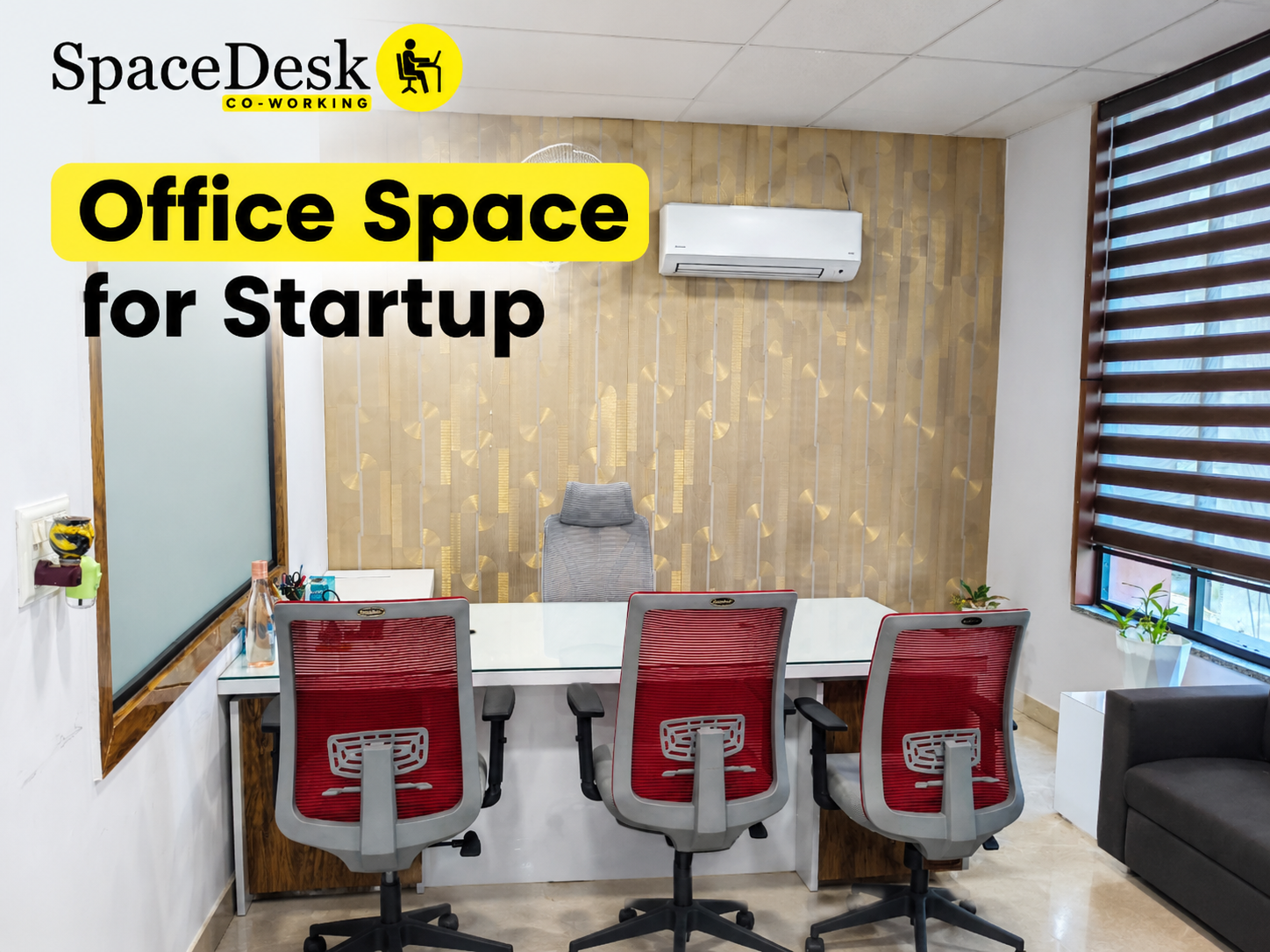
What Is Startup Office Space?
Startup office space is a workspace designed for new and growing businesses. It may be a shared desk, dedicated desk, private cabin, serviced office, or a small managed office for your team.
Unlike a conventional office, startup office space usually gives you access to ready to use facilities. You do not need to spend weeks arranging furniture, installing internet, setting up electricity connections, or managing daily maintenance.
A startup office space may include:
Comfortable desks and chairs
High speed internet
Power backup
Meeting rooms
Common work areas
Private cabins
Reception or visitor support
Printing and office services
Tea and coffee facilities
Flexible monthly plans
The main idea is simple. You should be able to move in, set up your laptops, and start working without dealing with the usual office setup problems.
Why Startups Need Flexible Office Space
Startups are different from established companies. Their team size, budget, work model, and business plans can change quickly.
You may begin with two founders working from one desk. After a few months, you may hire developers, designers, sales staff, or customer support employees. Later, some people may work remotely while others come to the office regularly.
A traditional office lease may not suit this type of changing business.
Flexible office space gives startups the option to:
Start with a smaller workspace
Add desks when new employees join
Move to a private cabin as the team grows
Avoid paying for unused space
Work without a long and restrictive lease
Use meeting rooms only when required
Control office costs more efficiently
Flexible offices allow startups to move into a fully equipped workspace and adjust their space according to their current headcount. This is useful when the team size is difficult to predict in the early stages.[knightfrank.co][regus]
Benefits of an Office Space for Startup
Lower Setup Costs
Setting up a traditional office can become expensive very quickly. The rent is only one part of the total cost. You may also need to pay for:
Security deposit
Interior work
Furniture
Internet installation
Electricity setup
Air conditioning
Cleaning
Office equipment
Maintenance
Security and reception services
For an early stage startup, these expenses may take money away from product development, hiring, marketing, and customer acquisition.
A coworking office space for startup usually combines several of these expenses into one monthly payment. You get a ready to use workspace with basic office infrastructure already available.
This makes it easier to estimate your monthly costs and avoid unexpected setup expenses.
Easy Team Expansion
A startup may hire quickly after receiving new projects or funding. Finding and setting up a new office every time the team grows is not practical.
A flexible coworking space allows you to add more seats or shift to a larger cabin based on your requirements. You can focus on hiring the right people instead of worrying about whether your current office can accommodate them.
This is one of the main reasons startups choose coworking spaces over traditional office rentals. The workspace can grow with the company instead of forcing the company to make decisions years in advance.
Professional Image
Even if your startup is small, you may need to meet clients, investors, suppliers, and business partners.
Working from home or meeting in a crowded cafe may not always create the right impression. A professional startup office space gives you a proper setting for meetings, presentations, interviews, and discussions.
A clean reception area, comfortable seating, stable internet, and a meeting room can make your business appear more organised and reliable.
This is particularly helpful for new startups that are still building trust in the market.
Better Focus for the Team
Working from home may be convenient, but it does not work equally well for everyone. Household distractions, poor seating, background noise, and a lack of routine can reduce productivity.
A shared office gives your team a clear place to work. Employees arrive with a purpose, settle into their desks, and follow a more organised routine.
A professional environment can also help separate work time from personal time. When the workday ends, team members can leave the office instead of carrying work into every room of the house.
Networking and Business Connections
Coworking spaces bring together professionals from different industries. Your startup may share the office with freelancers, consultants, agencies, remote employees, and other small businesses.
This creates opportunities for useful connections.
You may meet:
A designer for your next product update
A marketing consultant who understands your target audience
A software developer for a short term project
A business owner who can introduce you to a potential client
A founder who has already faced a challenge your team is dealing with
Networking does not always happen during formal events. It can begin with a simple conversation during a break or while using a common area.
What Type of Startup Office Space Should You Choose?
The best option depends on the size of your team, the nature of your work, and how much privacy you need.
Hot Desk for Small or Flexible Teams
A hot desk is a shared workspace where you use any available desk. It is suitable for founders, freelancers, remote employees, and startups with team members who do not come to the office every day.
This option helps keep costs low and works well when your team is still small.
Dedicated Desk for Regular Work
A dedicated desk gives your team member a fixed seat. It is a good choice when you want consistency and prefer to keep work materials in one place.
This option is useful for:
Small startup teams
Developers and designers
Content and marketing professionals
Remote workers who need a regular office
Founders who work from the office most days
Private Cabin for Growing Startups
A private cabin gives your team more privacy within a coworking environment. It is useful for startups that hold frequent discussions, work on confidential projects, or want a separate space for their core team.
A private cabin can also create a stronger team identity. You have your own area while still getting access to shared facilities such as meeting rooms, internet, and common spaces.
Meeting Room for Client and Investor Meetings
You may not need a private office for every hour of the day. But you may still need a professional meeting room from time to time.
Meeting rooms can be used for:
Client presentations
Investor meetings
Team planning
Job interviews
Product demonstrations
Training sessions
Video conferences
Before choosing a startup office space, ask how meeting room bookings work and whether the facility is included in your plan or charged separately.
What Should You Check Before Renting Startup Office Space?
The appearance of a workspace matters, but daily functionality matters more.
Internet Reliability
A startup usually depends on cloud applications, online meetings, project management tools, file sharing, and digital communication. A slow or unstable connection can disrupt the entire team.
Ask whether the internet is suitable for video calls and large file transfers. If possible, test the connection during busy working hours.
Power Backup
Power cuts can affect meetings, servers, uploads, and important deadlines. Check whether the workspace has reliable power backup and whether internet services continue during an outage.
Seating and Ergonomics
Your team may spend six to eight hours at their desks. Comfortable chairs, suitable desk height, proper lighting, and enough workspace should not be treated as extras.
Poor seating can affect comfort and concentration over time.
Privacy
If your startup handles customer information, financial details, product plans, or confidential contracts, ask about privacy.
Check whether private cabins, meeting rooms, or quiet areas are available. You should also understand how visitor access and document security are managed.
Access Hours
Some startups follow regular office hours. Others work with clients or teams in different time zones.
If your work schedule is flexible, ask whether 24 hour access is available. Do not assume it is included in every membership plan.
Location
Your startup office should be convenient for employees and clients.
If you are looking for office space for startup in Bhopal, a location near Aashima, Narmadapuram Road, and Misrod can be practical for teams and professionals based in the nearby areas. Good road access, parking, nearby services, and a comfortable surrounding environment can make regular office attendance easier.
Why Choose SpaceDesk for Your Startup Office?
SpaceDesk provides a professional shared workspace near Aashima on Narmadapuram Road in Misrod, Bhopal. It is suitable for startups that want a ready to use office environment without the cost and responsibility of setting up a traditional office from the beginning.
The workspace includes practical features such as:
High speed Wi Fi
Comfortable ergonomic seating
Power backup
Reserved desks
Secure storage
Unlimited tea and coffee
A professional work environment
Flexible workspace options for freelancers and teams
For a small startup, these facilities can provide a better starting point than working from home or committing to a large office lease before the business is ready.
How Much Does Startup Office Space Cost?
The cost depends on several factors:
Number of seats
Type of workspace
Location
Access hours
Meeting room usage
Private cabin requirements
Included amenities
Membership duration
A hot desk will generally cost less than a dedicated desk or private cabin. A small team may benefit from a private cabin, while a solo founder may only need a dedicated desk or day pass.
Before signing up, ask for a complete price breakdown. Check whether internet, electricity, maintenance, meeting rooms, parking, and other services are included in the quoted price.
Do not select a workspace only because it has the lowest rent. A cheaper office can become expensive if it has poor internet, uncomfortable seating, limited access, or additional charges for basic facilities.
When Should a Startup Move to a Traditional Office?
A coworking space can support a startup for a long time, but there may come a point when a private office makes sense.
You may consider moving to a traditional office when:
Your team size is stable
You need complete control over the layout
You require specialised infrastructure
You need extensive branding and customisation
Your work requires a high level of privacy
You can comfortably manage long term rent and setup costs
Until then, a flexible office space can help you operate professionally while keeping your risks manageable.
Choose a Workspace That Supports Growth
The right office space for a startup should do more than provide desks. It should help your team work comfortably, meet clients professionally, control costs, and adapt as the business changes.
For startups in Bhopal, a coworking space near Aashima, Narmadapuram Road, and Misrod can offer a practical combination of location, flexibility, and professional facilities.
SpaceDesk gives startups access to a ready to use work environment without the burden of setting up and managing a complete office. When your business is still finding its direction, that flexibility can be worth more than a large office with a long lease.
A good startup office space lets you spend less time worrying about the workplace and more time building the company.